Connect and Learn: The Emperor’s New Clothes, Written by Hans Christian Anderson
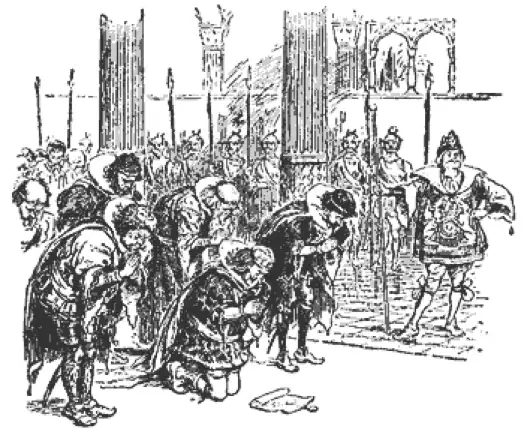
People Bowing to the vain emperor
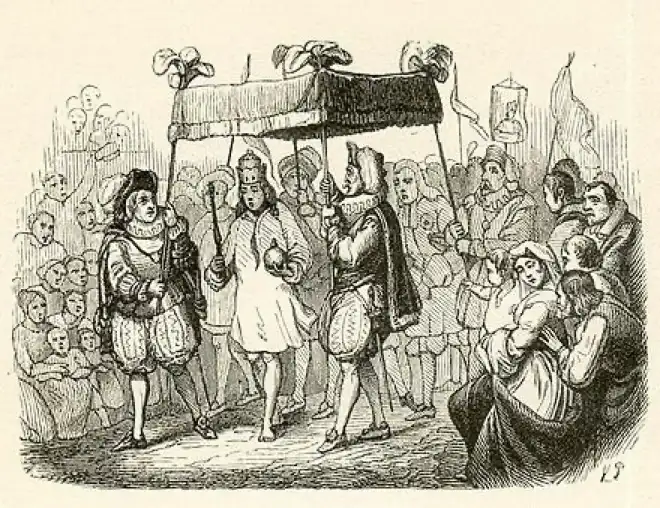
The Emperor without his pants on!
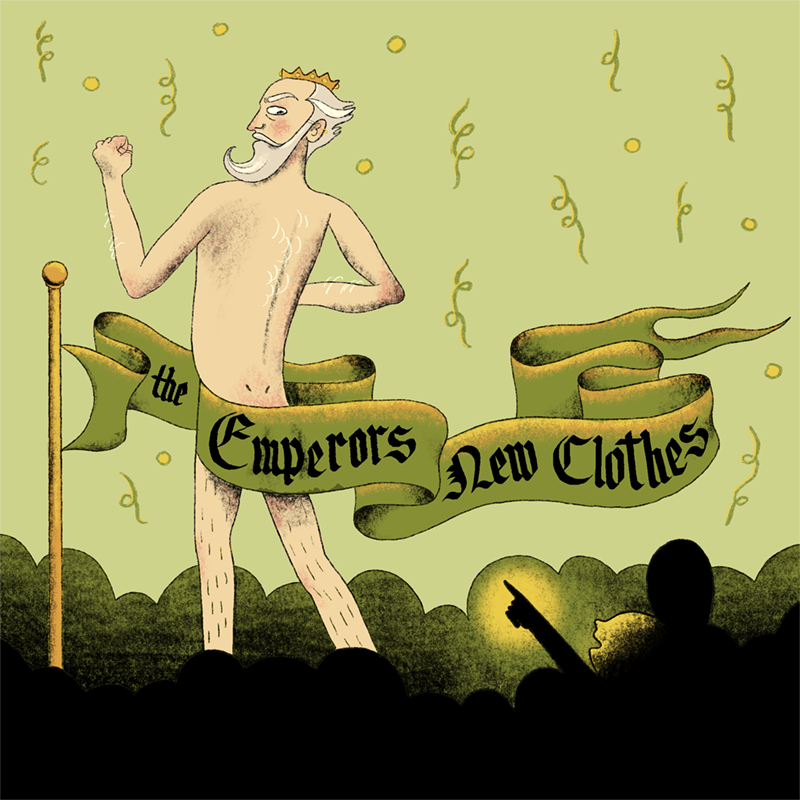
The Emperor’s New Clothes, written by Hans Christian Anderson,is a story about a vain emperor who loved fancy outfits! Two tricky tailors told him they could make him magical clothes that were invisible to anyone who was foolish or who was bad at their job. Even though the emperor couldn’t see the clothes, because it was a trick, he pretended that he could see them so that he wouldn’t seem unworthy!
His servants and the townspeoplealso pretended they could see them. When the emperor walked through town in his “new clothes,” everyone stayed quiet, afraid to admit the truth—except for one little child who shouted, “He’s not wearing anything!” The child’s honesty made everyone realize the emperor had been fooled, and he learned an important lesson about pride and honesty.
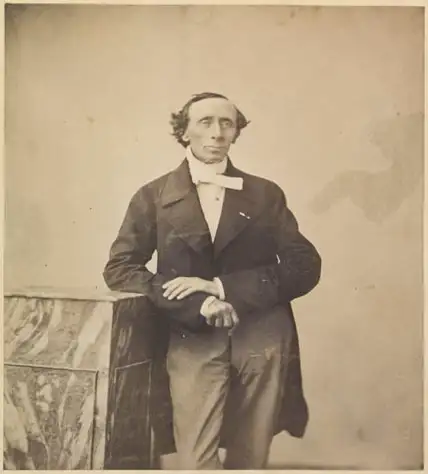
Hans Christian Anderson
Because we already taught you about the place where Hans Christian Anderson is from, (Do you remember Denmark?), in our Ugly Duckling Deep Dive, this deep dive we will teach you about the importance of speaking your truth and expressing your beliefs honestly. In order to teach you about speaking your truth, we are highlighting a few key people from history who are known for doing just that – being truth seekers and speakers and helping others around them! We’ll also share a brief history of weaving and show you some of the clothing the emperor in the story may have worn!
BUT FIRST, WHO WAS THE EMPEROR ANYWAY?
Hans Christian Anderson is a wonderful writer from Denmark.Do you remember the story of the Ugly Duckling, and how Hans also felt bullied as a little boy, just like the duckling? Good!Now we will tell you more about him! When Hans Christian Andersen, the author of The Emperor’s New Clothes, was a child, he went with his mother to see King Frederick VI of Denmark and Norway.Ina childhood memory, Hans remembers seeing the king and saying out loud, “Oh, he’s nothing but a human being!” This made his mother burst into tears and try to silence him. Based on Hans’ childhood memory, we think the Emperor in this story is based on King Frederick VI, because in the story a little boy yells out loud just like little Hans did.
But what does that mean?What did Hans expect the king to be like? Why would his mom burst into tears and try to silence little Hans?
Well, the king was a very important man, he was the ruler of Denmark and Norway.So people respected him, and probably were a little bit afraid of him, and anxious NOT to displease him.Hans had learned all about the king from his mom and his teachers, and they talked about the “great king”!So he probably expected to meet someone huge, larger than life, magnificent!But when he saw the king, he saw a man – just like any other man – but maybe dressed in a little bit fancier clothing.So he said “Oh, he’s nothing but a human being!”His mom was embarrassed, even though Hans was just telling the truth, because she didn’t want the king to think her son was rude!Sometimes,people can treat important people as if they matter more than an ordinary person, but a child usually treats people the same.
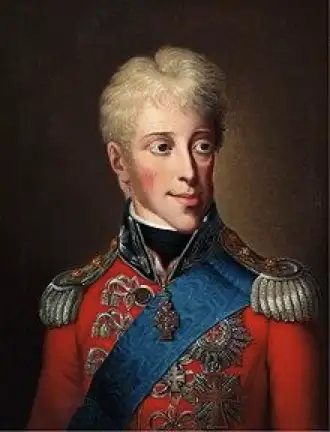
King Fredrick VI
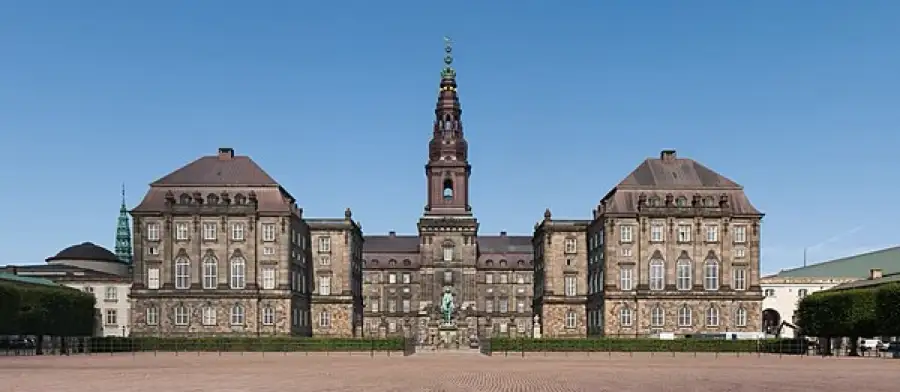
Christiansborg Palace in Copenhagen.
So who was this KING FREDERICK? And was he like the Emperor?
King Frederick VI was an important figure, and a good ruler!He was born in Copenhagen, Denmark, in Christiansborg Palace. Do you remember the song about Coppenhagen called “Wonderful Coppenhagen”- click the link to listen to it!
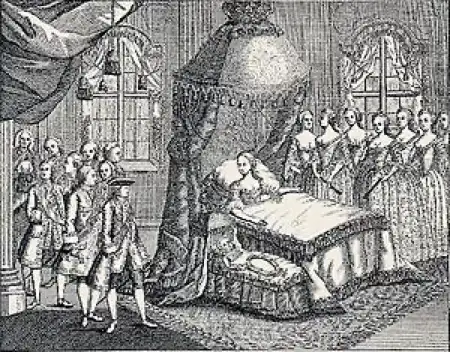
Children weren’t born in hospitals in the olden days, they were often born in their mothers’ bedrooms, or sometimes on the kitchen table!Snory godmother Marcia’s father was born in Texas, on his mothers wooden dining room table!
Frederick became the ruler when he was just 16 years old! Can you imagine such a young ruler?He doesn’t seem to be silly, like the emperor in our story.In fact, he introduced lots of new ideas that helped the government work better.He loved the arts, astronomy, and science.
In this picture, you can see that his clothes are velvet and very fancy. Maybe this impressed Hans Christian Anderson as a boy, when he saw King Fredrick VI, and so he wove it into his story about the Emperor New Clothes?What do you think?Have you ever seen something and then wanted to write or tell a story about it?That’s called being inspired! We think King Frederick VI inspired Hans Christian Anderson to write “The Emperor’s New Clothes”.
Queen Caroline Matilda's bedroom right after she gave birth to her son, Frederick VI
Just like Hans as a little boy shouting out about the King being just as man, and just like the little boy in the story said the emperor was not wearing anything, we want to take this Deep Dive to teach you about a few of our favorite people throughout history who spoke out about the truth and fairness and expressed their beliefs for the good of themselves and others!
Another way to describe the following people is that they didn’t follow the crowd. They spoke out about their beliefs to and with others even when no one else believed them and even when everyone else was saying the exact OPPOSITE! That takes a very brave person so stick to what they believe when no one else is doing it. Have you ever done or said something that you knew in your heart what the right thing to say or do? Even when it wasn’t popular? That’s very brave! We’d love to hear more!
A FEW TRUTH SPEAKERS - THROUGH HISTORY
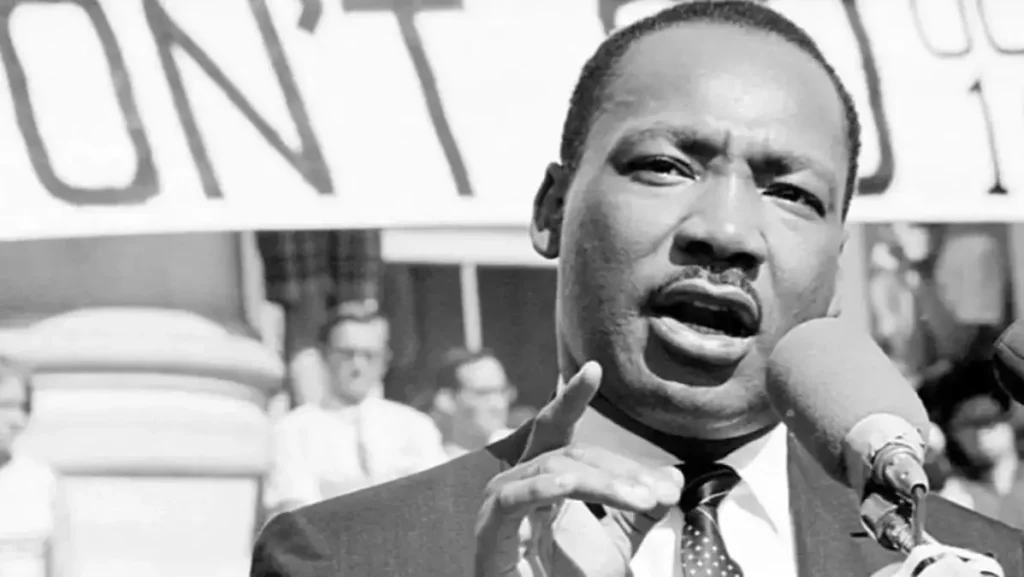
Martin Luther King Jr.
To begin, meet Mr. Martin Luther King Jr.!
Martin Luther King Jr. (or MLK for short) was a very brave man who believed that everyone should be treated fairly, no matter the color of their skin. Back then, a lot of people followed unfair rules that said Black people couldn’t do certain things, like sit in the same places as white people or go to the same schools. Can you believe that?! It would be a very unfair world if we were separated from our friends and family.
Instead of going along with those unfair rules, Martin Luther King Jr. spoke up. He told people the truth: that these rules were wrong and everyone deserves to be equal. You GO, MLK! Even though many people didn’t like what he said and it was scary to stand up, he kept talking about kindness, love, and fairness. Those are some of our favorite characteristics.
MLK didn’t fight with fists or hurt others—he used peaceful words and marches to show what was right. By not following the crowd and standing up for what was true, he helped change the world for the better!
In 1963 MLK led what was called the Civil Rights Movement and in 1963 he delivered a speech to about 300,000 people that started with “I have a dream” and in his speech he talked about all people being created equal. Look at all his listeners seen here in Washington DC. Were your adults alive in 1963? Ask them what they know about MLK!
The Civil Rights Movement & MLK’s “I have a Dream” Speech in Washington D.C.
COCO CHANEL
Coco Chanel
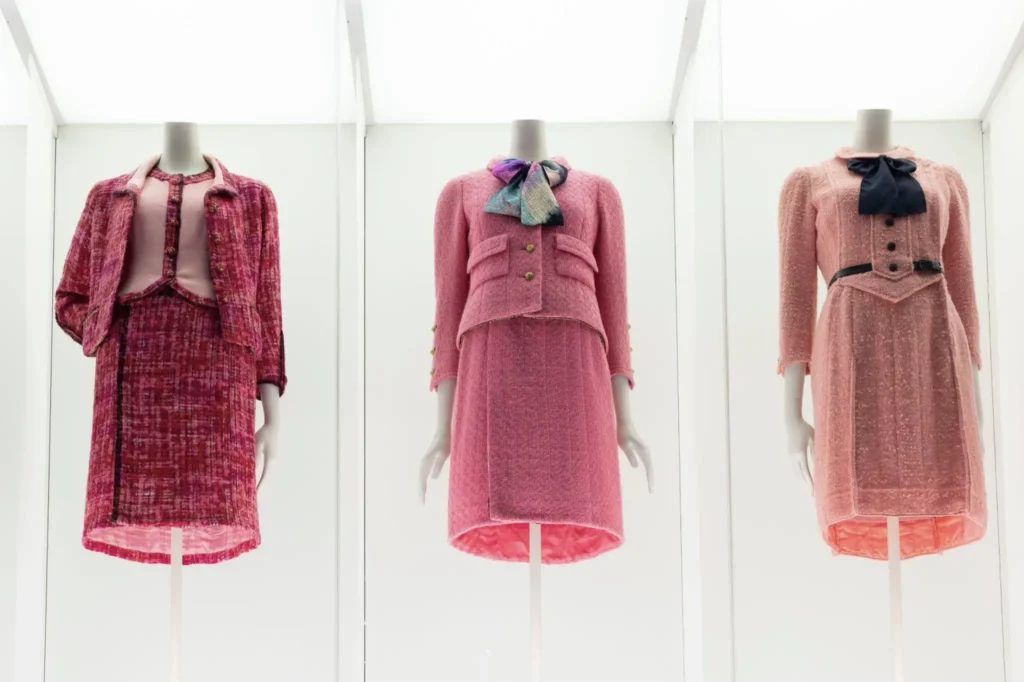
Coco Chanel was a very creative woman who changed the way people think about clothes. She’s what we would call a TRENDSETTER! A long time ago, women’s clothes were very fancy and uncomfortable—they wore tight corsets and big dresses that made it hard to move or play. Coco didn’t like that, so she decided to do something different.
She designed clothes that were simple, comfortable, and elegant. For example, she made pants and suits for women, which was unusual at the time because people thought only men should wear pants and suits! Coco believed that women should be able to dress however they wanted, and she didn’t care if others thought her ideas were strange.
Coco Chanel Designs
She also spoke the truth about style—she believed it wasn’t about being fancy or rich, but about being confident and feeling good in your clothes. By doing things her own way, Coco Chanel changed fashion forever and helped women feel free to express themselves! Clothing can help us feel and look our best! Whatis your favorite thing to wear? Your clothes are one way you EXPRESS YOURSELF!
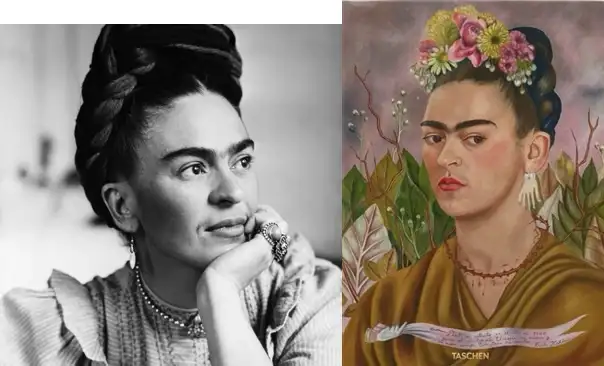
Frida Kahlo
Coco Chanel Designs
Frida Kahlo was an amazing artist from Mexico who painted pictures that told the truth about her life and feelings. When Frida was a little girl, she got very sick, and later she had a big accident that hurt her body. Even though it was physically hard for her, she used painting to share her story and show how strong she was.
Back then, most artists painted things like pretty landscapes or fancy people. But Frida painted herself and her life, even when it was sad or difficult. She didn’t try to make everything look perfect—she painted what was real, showing her feelings, her culture, and the things she cared about.
Frida also dressed in traditional Mexican clothes and was proud of where she came from. She didn’t follow what other people thought she should do or how she should look. By being herself and painting her truth, Frida inspired people all over the world to be brave and express who they are!
Have a look at another one of Frida’s paintings called “Roots” below!
”Roots” Painting by Frida Kahlo
The next person we’d like to teach you about is American author and humorist, Mark Twain!
Mark Twain
Mark Twain
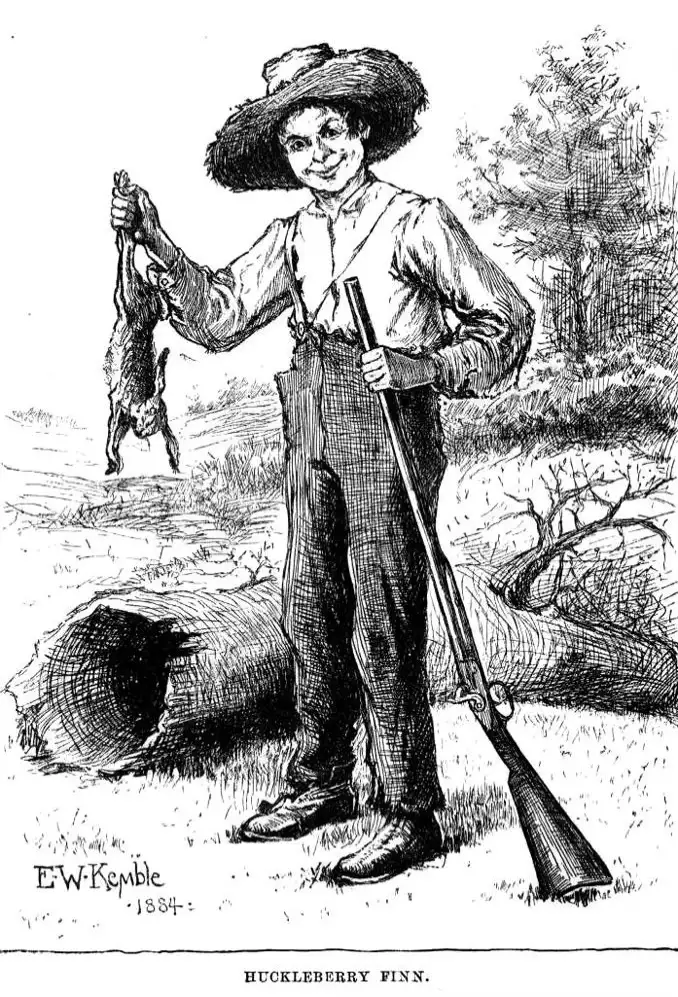
Mark Twain was a famous writer who told funny and exciting stories about life in America a long time ago. He wrote books like The Adventures of Tom Sawyer and The Adventures of Huckleberry Finn. These stories are about kids having adventures, exploring rivers, and standing up for what they think is right!
Illustration of the character Huckleberry Finn by Mark Twain
Mark Twain was also very good at telling the truth in a smart way. In Huckleberry Finn, he showed how wrong it was to treat people differently because of the color of their skin. He used his stories to help people see how unfair things like slavery and racism were, even though it wasn’t easy to talk about those things back then.
He also spoke his truth with humor, using jokes to make people think about serious problems in the world. By writing and speaking honestly, Mark Twain helped people see the world differently and still makes us think today!
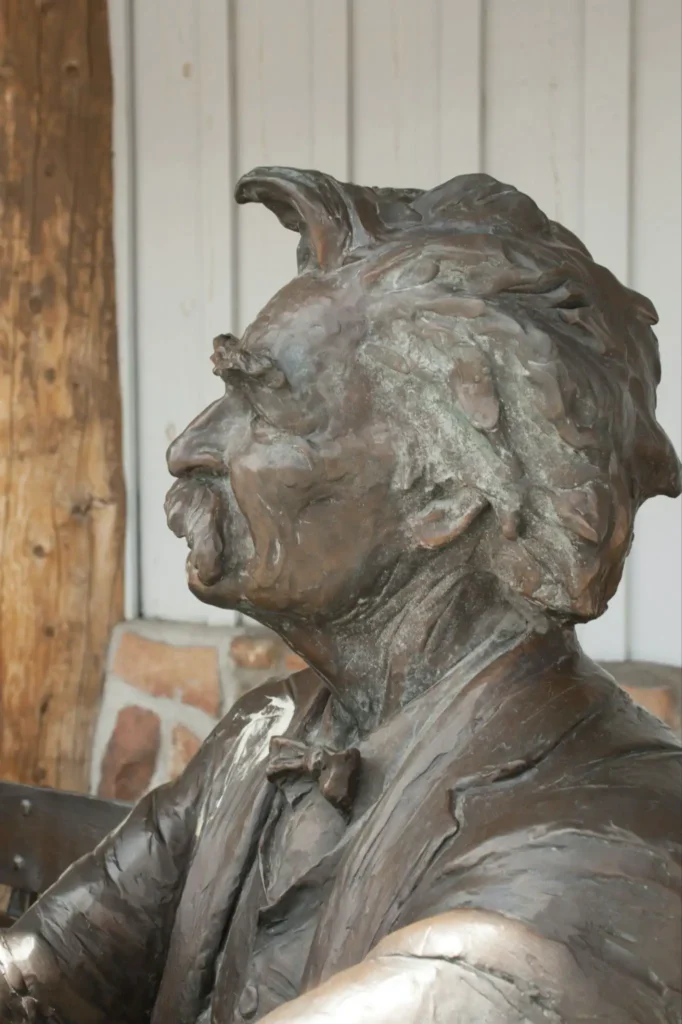
Statue of Mark Twain
Want to hear some funny things Mark Twain said throughout his life?!
Mark Twain had a great sense of humor and said lots of funny things that can make kids laugh! Here are some examples:
“Never put off till tomorrow what you can do the day after tomorrow just as well.” (He’s joking about procrastinating and how people like to delay doing things!)
“If you tell the truth, you don’t have to remember anything.” (He’s saying it’s easier to be honest than to keep track of lies!)
“It’s not the size of the dog in the fight; it’s the size of the fight in the dog.” (This means it doesn’t matter how big or small you are—it’s how brave and determined you are that counts!)
“The more I learn about people, the more I like my dog.” (He’s making a joke about how dogs are often kinder and easier to get along with than people.)
“I was gratified to be able to answer promptly, and I did. I said I didn’t know.” (He’s being funny about how it’s okay not to know the answer sometimes!)
Mark Twain loved to make people laugh and think at the same time!
Greta Thunberg
Greta Thunberg
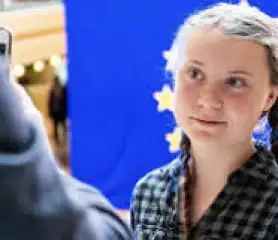
But it’s not just adults who are truth seekers!Do you know about Greta Thunberg, who fights for the environment?She started learning all about climate change when she was 8 years old, and it made her super sad.At 11 years old, she was so upset about the environment that she stopped speaking for a while!But then when she was a teen, she made a sign that said “School Strike for Climate” and she sat outside the Parliament until people started to notice! Soon, thousands of people and students were striking to bring awareness to climate change. She has been a speaker for the environment, and is a leader in global change.She even was nominated for a Nobel Peace Prize, which is a HUGE HONOR! So don’t ever let anyone tell you “oh, your just a kid, you can’t do anything”.Remember Greta started the protest as a young school kid – and she is a great example of a truth seeker!
Weaving
Now that we have shared a bit about some of our favorite truth seekers and speakers in history, we’d like to briefly share a bit about weaving and the emperor’s clothing before we invite you to participate in our final Play and Learn of Snoriezzz Season 1!
History of Weaving
We want to give you a little insight into what exactly is weaving, where it came from and how in the world it’s done!
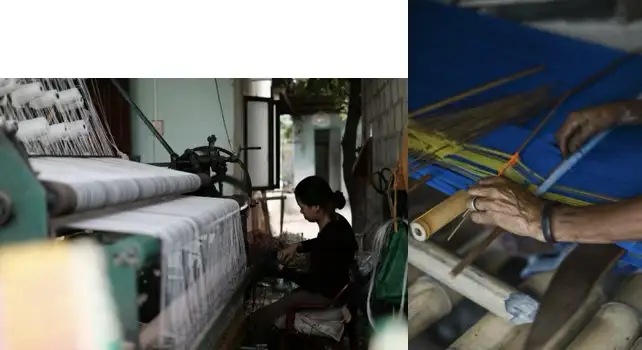
Weaving Process
Weaving is like making a giant fabric braid by crossing threads together to make something strong and useful, like clothes, fabric, rugs, or baskets!
Imagine you have two sets of strings:
One set goes up and down (called the warp).
The other set goes side to side (called the weft).
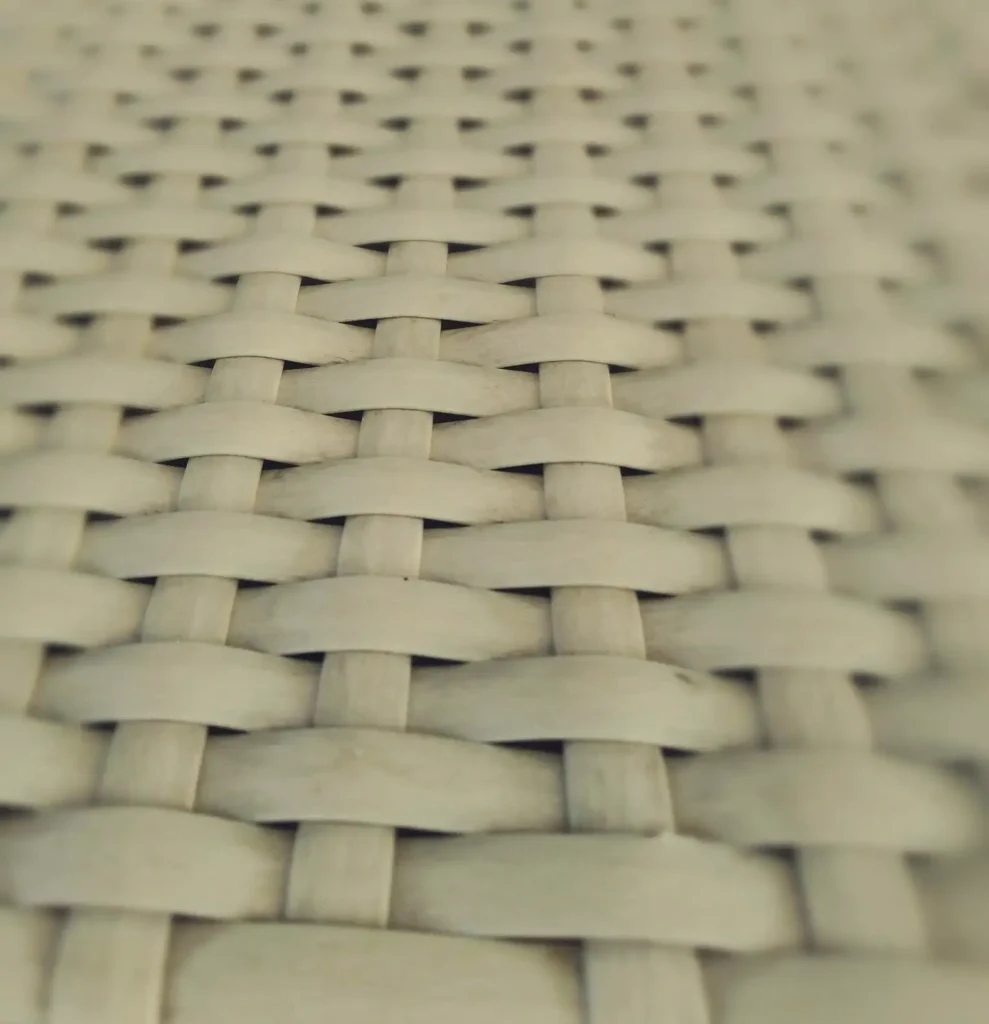
When you weave, you take the side-to-side threads and pass them over and under the up-and-down threads facing the other direction, kind of like threading a needle through holes. This crossing makes a pattern, and the threads stick together to make fabric!
Image of weaving up close
A Little History of Weaving
Weaving has been around practically forever! People have been doing it for thousands of years, even before there were big machines.
A long time ago: People used plants or animal fur to make thread and then wove it by hand. They made baskets, mats, and simple cloth to wear.
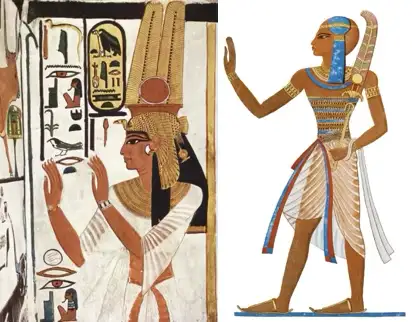
Egyptians in Ancient Egypt wove fine fabrics like linen to make clothing, especially for pharaohs which are Egyptian Kings!
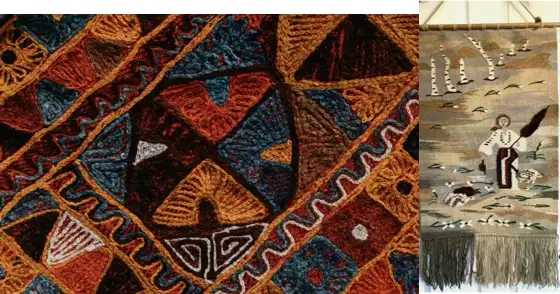
During the Middle Ages weaving became an art! People used big wooden looms, which are machines that help people weave to make colorful tapestries with pictures – kind of like a blanket that is so beautiful, it’s art!
Today: Giant Loom machines do most of the weaving super fast, so we can make tons of clothes and fabrics quickly.
Woven outfits of Egyptian Pharoahs and Princes
Weaving has always been important because it helps people create things they need to stay warm, comfortable, and stylish!But weaving also has practical uses because you can make woven baskets or hats to shade you from the sun!
Examples of Tapestry as Art
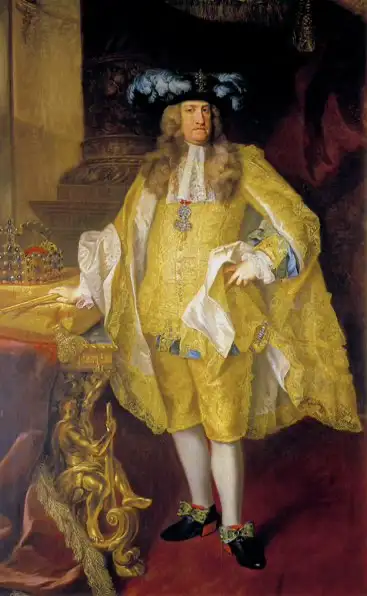
Clothes the Emperor was likely to wear:Weaving can make very fine materials, especially when you use silk threads and velvet!
Fine Yellow Silk Clothing
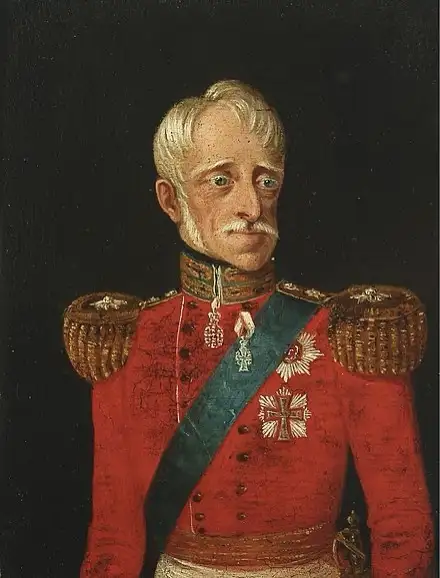
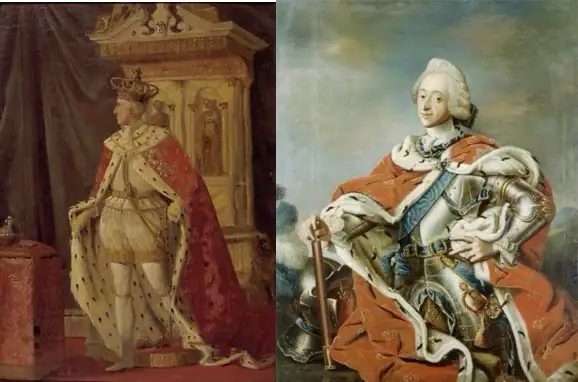
More images of King Frederick VI in his royal fancy fabrics and woven robes.
If you take three strips of material, you can try to braid it into a long piece.Then, curl it up, and you will have made a little place mat!
We hope you enjoy weaving! Thank you for joining us!! Please join us in the Play & Learn for activities associated with Emperor's New Clothes!
We use cookies to ensure that we give you the best experience on our website. By using this site you are agreeing to our website terms and privacy policy.